
 Weather is not scenery. It is pressure, timing, and the thing your characters cannot argue with.
The Long Sentence and the Short: Pacing Landscape on the Page
Landscape is not just what you describe. It is how you describe it. A mountain rendered in short, clipped sentences feels different from a mountain rendered in one long, winding one. The difference is not decorative. It is structural. Sentence length controls pace, breath, and attention, and when you are writing about the natural world, those are the same things the natural world controls in us.
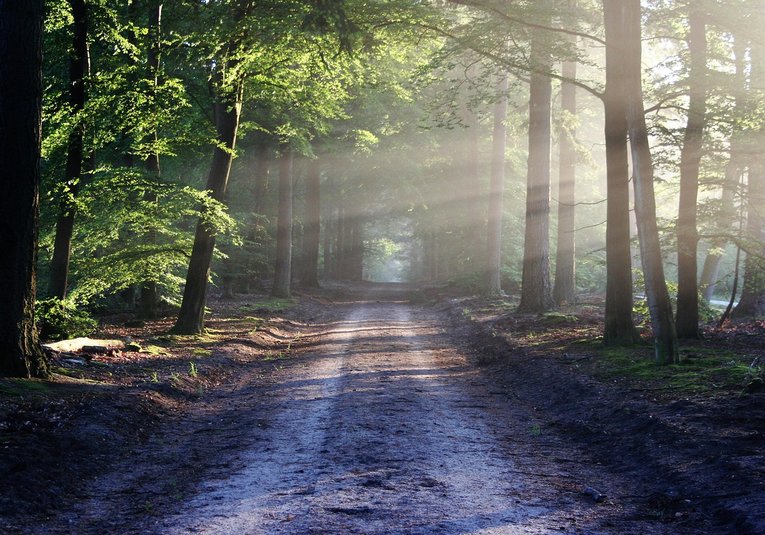
Think about how you actually experience a landscape. A ridge line comes into view slowly, over minutes, as you climb. A river appears suddenly, around a bend. A field opens all at once. Your prose can mimic these experiences, not by describing them but by enacting them. A long sentence that accumulates clauses the way a trail accumulates switchbacks will feel like climbing. A short sentence that lands hard will feel like the moment the trees break and the valley is suddenly there.
The Breath of the Reader
Prose is breath. Even silent reading engages the body's sense of rhythm. When you write a long sentence, you are asking the reader to hold on. When you write a short one, you are letting them exhale. Neither is better. But if you never vary, the reader stops feeling the landscape and starts feeling the monotony.
Try this experiment. Write a paragraph about a forest using only sentences of fewer than eight words. Then write the same paragraph in two sentences, each over fifty words. Read both aloud. The first will feel like walking through underbrush, each step separate. The second will feel like being carried. Both are true to the forest. They are true to different forests, or to the same forest at different moments.
Poets already know this, but fiction writers often forget it. A scene of pursuit needs short sentences. A scene of standing at a cliff edge needs a long one. The content and the form should agree. When they disagree, the reader feels a friction they cannot name, and they usually blame the story rather than the sentence.
Silence and the Space Between
There is also the sentence you do not write. The paragraph break. The white space. In poetry, the line break is a form of punctuation that can be louder than any comma. In prose, the section break does the same work. A landscape described in a single unbroken block feels dense and impenetrable. The same landscape broken into fragments feels like a series of clearings.
Use white space the way a trail uses overlooks. Give the reader a place to stop and look back. Not every paragraph needs to be a vista, but the ones that are should be set apart.
The final test is physical. Read your landscape aloud. If you run out of breath in the middle of a sentence, the reader will too. If you finish a sentence and feel like you have arrived somewhere, the reader will feel that as well. The page is not a container for landscape. It is a landscape. Build it with the same attention you would give to the ground under your feet.